Executive Summary: Liquid explosive detection scanners play a crucial role in cross-category physical security projects by enabling non-invasive, rapid identification of threat liquids. For integrators facing mixed-equipment requirements or ambiguous specifications, confirming the target liquid detection capability is essential for scoping and sourcing the correct technology.
Increasing passenger throughput, evolving threat vectors, and new regulatory requirements have vastly complicated liquid explosive screening. Security System Integrators and procurement leads are routinely tasked with selecting scanners that match unique facility layouts, regulatory environments, and throughput demands. This guide delivers a technically rigorous overview of liquid explosive detection scanners, addressing mechanisms, application scenarios, engineering constraints, and practical limitations. It supports critical decision-makers in understanding what these systems can—and cannot—deliver, and how to choose the right technology for complex deployments.
Featured Snippet: Liquid explosive detection scanners are specialized security devices designed to identify threat liquids in containers without opening them, using technologies such as Raman spectroscopy, dielectric measurement, or X-ray analysis to detect explosive compounds rapidly and accurately at checkpoints.
Liquid explosive detection scanners rely on non-destructive analytical techniques to rapidly discriminate between benign and suspicious liquids. Understanding these core mechanisms is critical for specifying systems that genuinely match threat profiles and operational needs.
Many advanced scanners employ Raman spectroscopy, analyzing molecular vibrations induced by a laser to generate a unique spectral fingerprint. This approach excels at differentiating between chemically similar liquids (e.g., explosives vs. water, alcohol, or soft drinks) and functions without direct contact with the liquid. Raman devices are favored for their minimal false alarm rates and comprehensive threat libraries—but may struggle with dark or opaque containers, as well as substances deliberately masked within complex mixtures.
Some systems use a low-power electromagnetic field to probe the dielectric constant of the liquid in question. By comparing measured dielectric properties against known values for threat substances, these scanners deliver rapid pass/fail assessments. While cost-effective and fast, this method may not distinguish sophisticated mixtures designed to mimic common items, limiting its standalone reliability for high-threat environments.
X-ray-based liquid explosive scanners analyze the absorption and scattering of X-rays through liquid-filled containers. By detecting density differences characteristic of organic explosives, these units offer good performance across a wide variety of container types. However, their use involves additional safety controls and may entail regulatory compliance challenges specific to ionizing radiation.
Leading-edge solutions integrate two or more of the above technologies in a single unit, increasing detection accuracy and reducing ambiguity, especially for containers with unknown or layered compositions. These multi-modal platforms require sophisticated calibration and regular library updates, particularly relevant for sites facing evolving threat profiles or new regulatory mandates.
Selecting, installing, and operating liquid explosive detection scanners demands careful attention to the underlying engineering factors that affect safety, accuracy, and interoperability within larger security ecosystems.
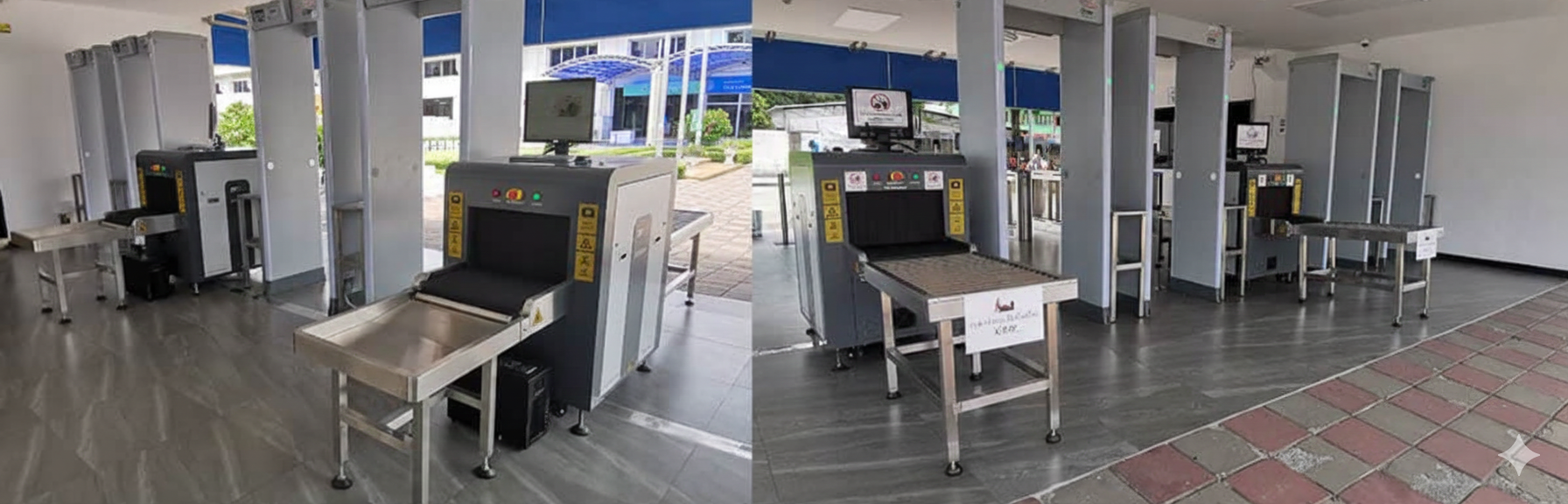
Scanners come in countertop, floor-standing, or integrated conveyor-belt models. Choice of enclosure materials—typically stainless steel, aluminum alloys, and reinforced polymers—delivers requisite durability for high-throughput public environments. Critical tolerances include temperature operating ranges (often 0–40°C), ingress protection ratings (commonly IP54 or higher), and resistance to vibration or electrical interference in demanding locations like transit hubs.
Most modern scanners offer digital interfaces (USB, Ethernet, relay outputs) for integration with checkpoint management systems and central alarm stations. Compliance with global standards—including IATA, ECAC, and US TSA for civil aviation—is a key consideration in project engineering. AES-encrypted data streams and audit trail logging are increasingly expected to support regulatory and operational transparency.
Routine calibration, threat library updates, and firmware patching all impact the long-term reliability and compliance posture of a scanner fleet. Procurement strategies should account for vendor support options, software update frequency, and the availability of multi-language GUIs for diverse operator teams.
While airports remain the most visible context for liquid explosive detection, integrators are deploying these systems across a spectrum of sectors—often in innovative combinations.
Procurement leads and project engineers navigating ambiguous requirements or integrating across multiple checkpoint types must focus on several key evaluative criteria for liquid explosive detection scanners.
If the specific liquid explosive detection need cannot be precisely identified, pause procurement until the critical parameters—target liquids, container variety, throughput profile, and integration constraints—are fully clarified.
Routine preventative maintenance for these scanners typically includes exterior cleaning (to avoid sensor contamination), scheduled calibration (monthly or quarterly depending on throughput), and regular software/firmware updates. For scanners using laser or X-ray sources, periodic certified inspections and source replacement are required. System downtime and inability to update detection libraries undermine security posture, so specifying maintenance SLAs and remote diagnostics features is a best practice during procurement.
Most commercial scanners provide clear results in under 10 seconds per container, with leading systems achieving accurate analysis in 3–5 seconds based on the method and sample complexity.
High-end multi-modal scanners are specifically designed for both organic and inorganic threats, but not all devices offer this capability. Confirm supported substance lists with the manufacturer or authorized distributor.
Vendors periodically release software updates containing signatures for newly identified substances. Effective acquisition and deployment strategies should include contractual provisions for rapid library updates and version management.
Yes, compact countertop and conveyor-integrated models have proven effective in government buildings, sports venues, logistics hubs, and other high-traffic sites where liquid carriage security is required.
Key ongoing costs include calibration materials, software maintenance, threat signature updates, and (for some models) consumables like X-ray sources or laser modules. Budget for both routine maintenance and periodic compliance checks.
Liquid explosive detection scanners are essential components within integrated security deployments, mitigating complex liquid threat scenarios across diverse infrastructure. Their varied engineering, application, and integration requirements demand clear scoping before procurement. Specify the precise detection objectives, container types, throughput, workflow integration, and compliance standards for your project—then contact a specialized supplier at GS Automatic to discuss compatible solutions and request a tailored quote.