Executive Summary: Facility managers selecting automatic door systems must precisely match sliding, swing, or revolving configurations to their site's security, accessibility, and code compliance needs. Robust fail-safe versus fail-secure logic, reliable sensor safety, and ease of integration with access and fire systems determine project success in high-traffic or high-security applications.
Introduction: Managing facility entrances is an exercise in balancing accessibility, aesthetics, and robust security—often under strict fire/life safety regulations. For environments ranging from retail storefronts to secure data centers, automatic door systems radically improve convenience while introducing complex technical, regulatory, and operational choices. Getting the configuration right—whether for simple ADA-compliance at a main entrance or advanced anti-tailgating in a high-security mantrap—requires an engineer-level understanding of both the regulations in play and the performance features offered by modern automatic door solutions. This guide delivers a comprehensive technical orientation grounded in real-world applications, core standards, and best practices for selection and operation.
Automatic doors provide convenient, accessible, and secure entry solutions by automating sliding, swing, or revolving entranceways, enhancing both usability and security; optimal configuration demands close attention to building code compliance, security needs, and user flow.
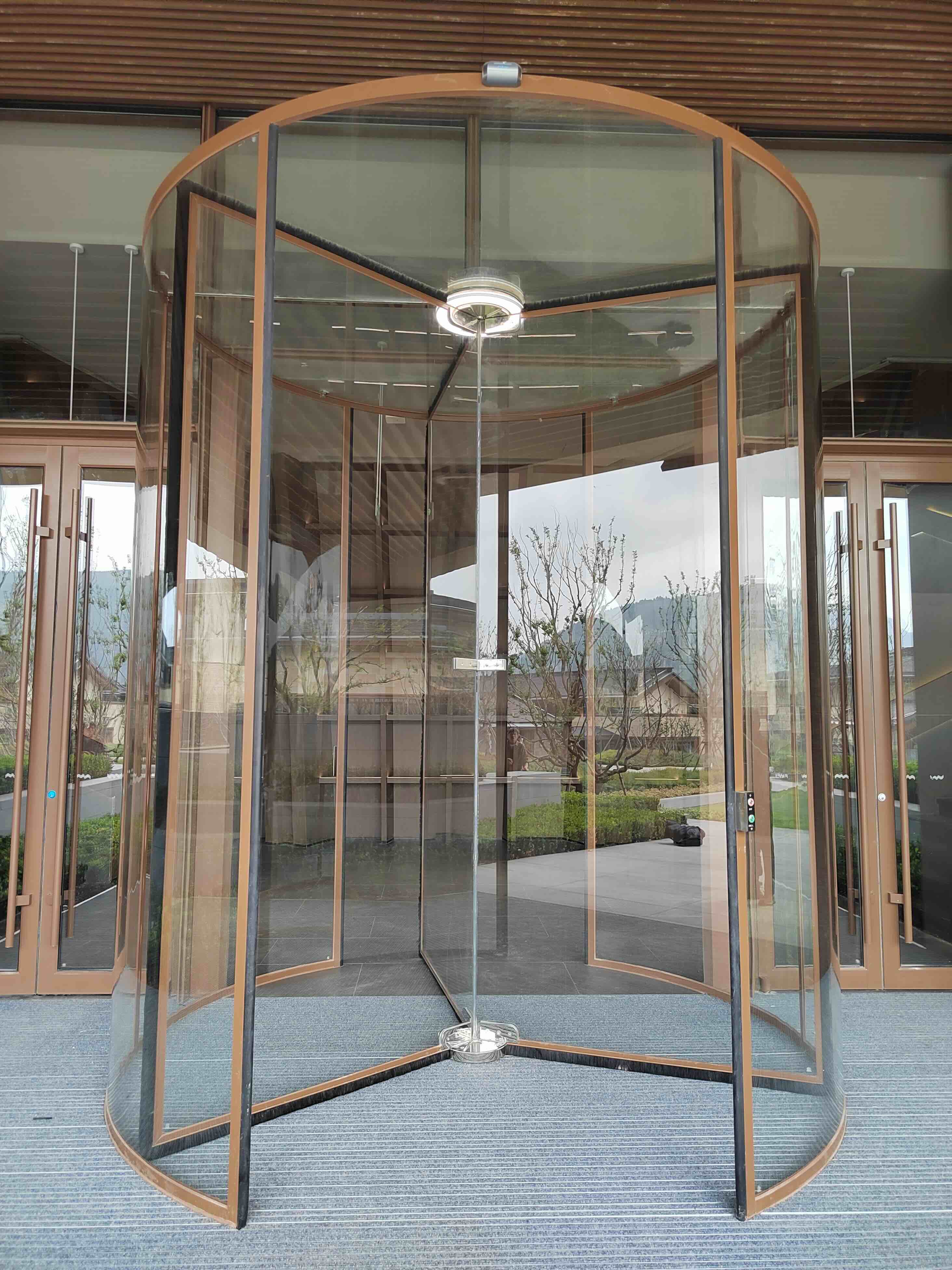
Automatic doors are engineered to control entry by converting electrical signals—usually from sensors or access-control systems—into mechanical movement. Three primary configuration types exist:
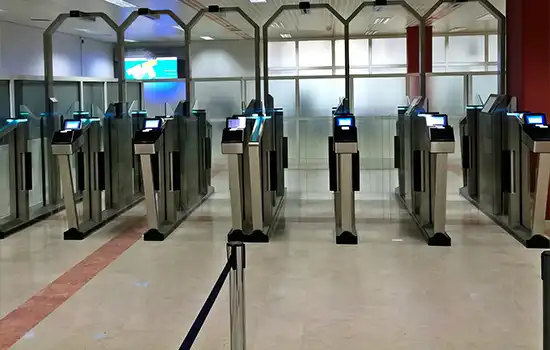
At higher-security sites, automatic doors can interlock within a mantrap—a vestibule or 'airlock'—so only one door opens at a time, strictly regulating single-person entry and denying “tailgating.” Operators involve direct-drive or belt-driven motors, integrated with controllers that accept inputs from a network of sensors, push-buttons, fire-alarm relays, and credential devices.
Presence and safety sensors (infrared, microwave, or hybrid technologies) are critical for preventing pinch and impact injuries. Sensor calibration tolerances—set to ANSI/BHMA A156.10, A156.19, and related standard families—must be periodically validated, as automatic door motion cannot rely solely on visual observation for user safety. Force profile calibration ensures the door operates within accessibility force limits, usually under 5 pounds of opening force per ADA guidelines, with non-negotiable compliance at public entrances.
Fail-safe: Upon power loss or fire-alarm activation, locks or drive mechanisms release, ensuring free egress—mandatory where local building codes require unobstructed exit during emergencies. Fail-secure: Doors remain locked when unpowered, securing sensitive areas but only permissible where life-safety egress is not required or can be otherwise assured (e.g., interior data vaults not intended as egress).
This distinction dictates hardware selection and system wiring: improper implementation risks life-safety violations or security gaps. Fire-alarm system interfaces must override access control and motor logic in compliance with local codes and NFPA/Life Safety standards. Battery backup and monitored relays provide additional assurance during loss-of-mains events.
Regulations, such as the US ADA Standards for Accessible Design and regional equivalents worldwide, demand a minimum clear-opening width—typically 32 inches (813 mm) measured between the face of the door and the stop—when the door is open to 90 degrees. Automatic operators must not impede this space, irrespective of actuator/sensor placement or jamb hardware. Accessibility force requirements (<5 lbs to initiate opening) must be maintained, even during actuator or track wear.
Security interlocked mantraps require doors equipped with logic controllers that precisely coordinate opening/permitting signals. Door A cannot unlock unless Door B is fully closed and secured; motion sensors must detect and compensate for delayed closing or obstruction events. Tailgating mitigation requires sensor and software redundancy; simple relay interlock is insufficient—active person-detection (weight, optical, or machine-vision) is increasingly adopted in critical scenarios.
Automatic doors support tight integration with building management, access control, and fire-alarm subsystems. Common accessories are credential readers (card, biometric), automatic unlock during fire evacuation, and network monitoring for status/service condition alerts.
Map entrance type (public, staff, secure compartment) to required door behavior. High-traffic public areas typically favor sliding doors, while mantrap or vestibule security areas demand interlocked swing or sliding variants. For energy efficiency and aesthetic entry points, consider revolving doors with advanced access control compatibility.
Confirm that door configuration, actuator placement, and sensor type all support minimum accessibility requirements—particularly clear-open width and opening force. Check local egress codes for any project- or region-specific mandates superseding manufacturer defaults.
Audit whether any entrance will ever serve as an evacuation route. If so, ensure the selected operator and locking hardware default to fail-safe behavior under fire-alarm/power failure. For secure compartments, validate fail-secure logic does not block mandated egress, either via bypass override or restricted zone design.
Assess whether the door needs to interlock with credentialing (badges, biometrics), fire-alarm panels, or building automation. Integration infrastructure (wiring, relays, monitored signaling) must be planned at the project design stage.
Touchless activation, remote monitoring, and deeper automation integration are rapidly becoming baseline expectations. Select systems with upgradeable controllers and network interfaces to meet evolving health and safety protocols.
Fail-safe automatic doors unlock and allow free passage during power loss or fire-alarm events, ensuring safe evacuation—a strict requirement at most egress points under building and fire codes. Fail-secure doors remain locked when unpowered, offering enhanced area security but only allowed where egress is not required or is otherwise assured, such as within restricted security zones.
Mantrap configurations use interlocked pairs of automatic doors—only one may unlock at a time. Integrated sensors, person-detection algorithms, and access controls prevent two people from passing through together, defeating unauthorized “tailgating” attempts. Advanced systems combine weight sensors, timed logic, and sometimes video analytics for heightened anti-tailgating assurance.
Most codes, including the ADA and its international analogs, require a minimum 32-inch clear opening with the door open 90 degrees, measured from the door face to the stop. Automatic door hardware, sensors, and actuators must not encroach on this clearance when installed at public or staff entrances.
Yes, quality automatic doors provide interfaces for access control, credential readers, fire-alarm override, and building automation systems. Interlocks and monitored relays ensure doors default to fail-safe open on fire alarms at required egress points, and status reporting can be networked for centralized monitoring.
Routine maintenance includes calibrating safety/presence sensors, inspecting and lubricating all mechanical moving parts, testing egress fail-safe and interlock logic (for mantraps), checking for unobstructed clear openings, and verifying fire-alarm integration at required intervals. Maintenance schedules and reports are commonly subject to code compliance audits.
Precision in specifying and maintaining automatic doors—particularly for complex industries with conflicting requirements for accessibility, security, and egress—is non-negotiable. Facilities managers and project owners should begin by mapping traffic, code, and security needs to sliding, swing, or mantrap configurations, then validate all compliance, fail-safe and integration attributes before procurement. Ready to optimize or re-evaluate your entrances? Provide your entry type and security priorities for a matched configuration proposal from our technical team.